
Hot flashes aren’t subtle. They interrupt your workday, your sleep, your confidence, and your quality of life. Hormone therapy can help, but many women want additional options — especially lifestyle approaches that support long-term health.
A new randomized controlled trial published in Menopause, “A Dietary Intervention for Vasomotor Symptoms of Menopause” (Barnard et al., 2023), offers a compelling possibility:
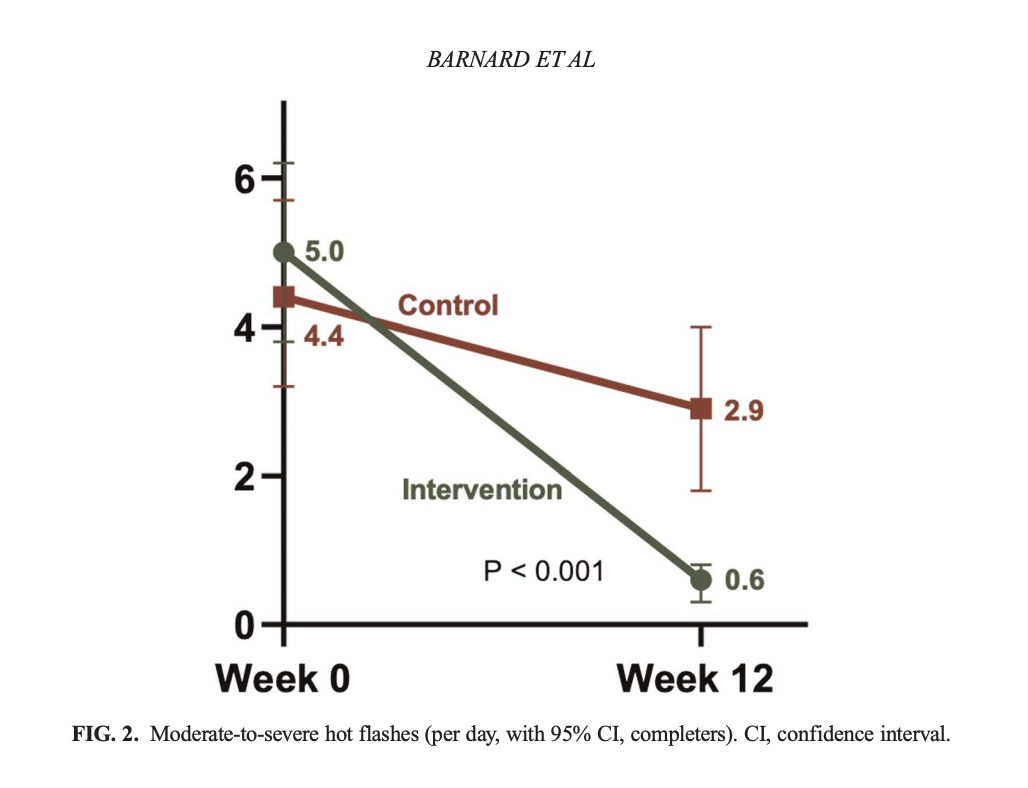
a low-fat, plant-based diet including daily soybeans reduced moderate-to-severe hot flashes by 88% in 12 weeks — compared to 34% in the control group.
Half of the women in the intervention group reported zero moderate-to-severe hot flashes by the end of the study.
That is a remarkable outcome for a non-pharmacologic intervention.
What the Study Looked At
Researchers enrolled 84 postmenopausal women who reported at least two moderate-to-severe hot flashes per day. Participants were randomized to:
(1) A low-fat, vegan diet + ½ cup cooked soybeans daily
(2) A control group making no dietary changes
Hot flashes were logged in real time using a mobile app, and quality-of-life changes were measured with the MENQOL questionnaire. The study lasted 12 weeks, with cohorts beginning in both fall and spring to rule out seasonality.
Key Findings
-
Moderate-to-severe hot flashes fell by 88% in the intervention group vs. 34% in controls.
Half of the intervention completers had no moderate-to-severe hot flashes by week 12. -
Total hot flashes (all intensities) dropped 78% vs. 39% in controls.
-
Improvements extended beyond vasomotor symptoms:
physical, sexual, and vasomotor quality-of-life domains also improved significantly. -
The dietary pattern led to significant weight loss:
-3.6 kg in the intervention group vs. -0.2 kg in controls. -
Benefits were not dependent on equol status, meaning women who cannot convert soy isoflavones into equol still experienced strong improvement.
-
Symptom reductions correlated with:
-
lower fat intake
-
higher fiber intake
-
increased soy isoflavones (daidzein + genistein)
-
weight loss
But no single factor fully explained the results — suggesting synergy among diet, soy, and metabolic changes.
-
Why It Works
Hot flashes are influenced by estrogen fluctuations, inflammation, metabolic health, and the autonomic nervous system. Several mechanisms may explain why this diet performed so well:
-
Lower dietary fat + higher fiber may reduce circulating estrogen levels over time.
-
Soy isoflavones (daidzein, genistein) act as selective estrogen receptor–β modulators — offering gentle, plant-based hormonal effects.
-
Weight loss, even modest, is strongly associated with reduced vasomotor symptoms.
-
Improved gut microbiome in plant-based eaters may enhance the body’s ability to metabolize soy, though this study found benefits regardless of equol production.
The result is a body environment that is calmer, less inflamed, more balanced, and more resilient through menopause.
What Does This Mean for Everyday Life?
No single diet solves menopause for every woman — but this study shows that what you eat can significantly shift the severity and frequency of symptoms.
This isn’t about perfection or extreme restriction. The women in the study simply:
-
ate more whole, plant-based foods
-
reduced added oils and animal products
-
consumed ½ cup cooked soybeans daily
-
let the rest take care of itself
The takeaway is empowering: your daily food choices can influence your hormones, your metabolism, and your comfort — even in menopause.
You have more control than you think.
Where Everyday Life Meets FITNESS SF
At FITNESS SF, we coach members through every stage of life — including the hormonal shifts that shape energy, strength, sleep, and mood. This research aligns with what we see every day:
When people eat more whole foods, support their gut health, reduce excess weight, and engage in regular movement, everything gets better — from mood to metabolism to hot-flash intensity.
Our trainers and nutrition-minded staff can help you explore changes at a pace that fits your lifestyle and your goals. Whether it’s plant-forward eating, strength training that supports healthy weight, or a holistic routine that prioritizes sleep and stress management, we’re here to help.
Menopause is not the end of feeling good in your body. It’s the beginning of learning what your body responds to — and how much better you can feel with the right support.
*The content on this blog is provided for general informational purposes only. It does not constitute medical advice. No responsibility or liability is assumed for any actions taken based on the information provided.