

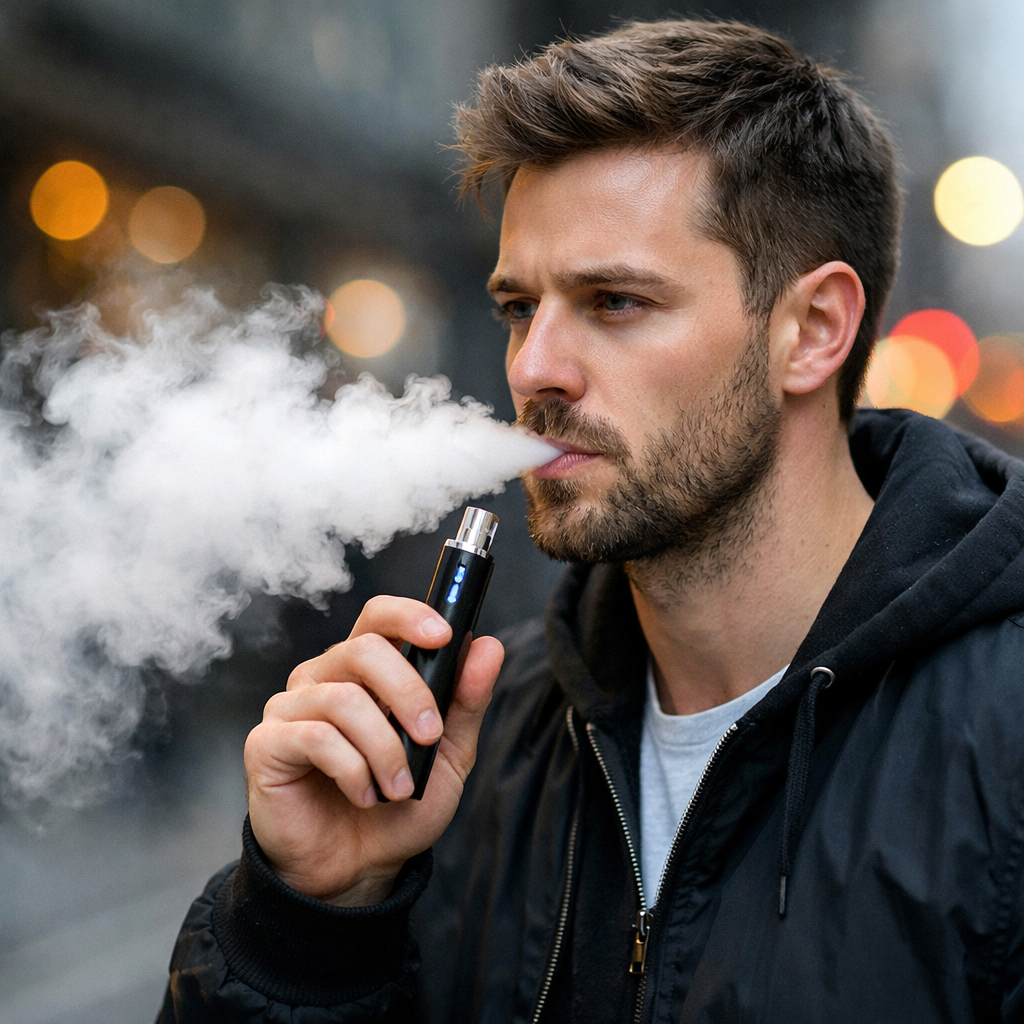
Walk anywhere, and you’ll see it—vapes everywhere. Sleek, discreet, and widely accepted, they’ve become part of the modern landscape, often framed as a cleaner, safer alternative to smoking.
But when you step back and examine what’s actually happening inside the body, the story becomes much less reassuring.
From the 2023 "Cardiopulmonary Impact of Electronic Cigarettes and Vaping Products: A Scientific Statement From the American Heart Association" and the 2022 review "Vaping and Lung Inflammation and Injury" the message is consistent: vaping introduces a chemically complex aerosol that drives inflammation, oxidative stress, endothelial dysfunction, and measurable impairment in both pulmonary and cardiovascular systems.
The Illusion of “Safer”
E-cigarettes were introduced as a harm-reduction tool for smokers, and in that narrow context, they may have a role. But that’s not how vaping has evolved. It has spread rapidly among young, otherwise healthy individuals—many of whom never smoked in the first place. What began as a substitute has become its own category of exposure.
At the same time, medicine has already had to confront a new and alarming reality. In recent years, clinicians across the United States began seeing cases of severe lung injury directly linked to vaping. These were not theoretical risks or long-term projections. These were acute presentations—shortness of breath, hypoxia, respiratory failure—in patients who, in many cases, had no prior lung disease.
That alone should shift how we think about vaping.
What You’re Actually Inhaling
One of the most persistent misconceptions is that vaping produces harmless “water vapor.” In reality, what’s being inhaled is an aerosol—a suspension of fine particles created by heating a liquid solution.
That solution typically contains nicotine, chemical solvents like propylene glycol and glycerin, flavoring agents, and a range of other compounds that can form new chemical byproducts when heated. Metals from the device’s heating element can also be introduced into the aerosol.
None of this is trivial. The lungs are not designed to filter or neutralize complex chemical mixtures. They are designed for rapid gas exchange, which means that anything inhaled has a relatively direct pathway into the bloodstream.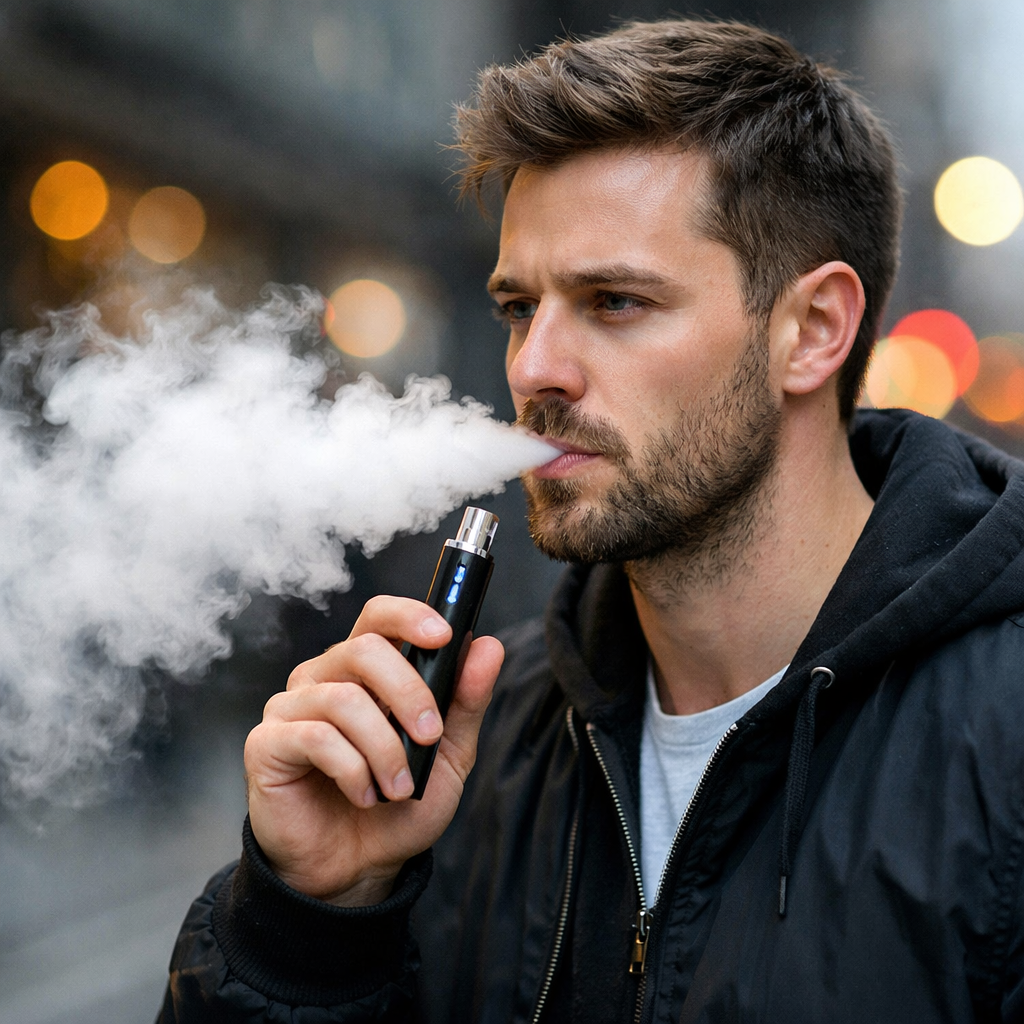
What Happens Inside Your Lungs
When that aerosol reaches the lungs, the body responds as it would to any foreign irritant—with inflammation. This response may begin subtly, but repeated exposure creates a persistent inflammatory environment that alters normal lung function.
At the same time, the lungs’ natural defense systems begin to degrade. The cilia, which are responsible for clearing mucus and debris, slow down. Mucus becomes thicker and more difficult to clear. Over time, this combination reduces the lungs’ ability to protect themselves, increasing susceptibility to respiratory infections and chronic irritation.
At a cellular level, the effects become even more concerning. Vaping introduces oxidative stress into lung tissue, which can damage DNA, disrupt cellular repair processes, and contribute to long-term structural changes. Markers of small airway injury and inflammation have been observed even in otherwise healthy individuals, suggesting that the process begins earlier than most people would expect.
It’s Not Just the Lungs — It’s Your Cardiovascular System
What often gets missed in the public conversation is that vaping is not confined to the lungs. It has measurable effects on the cardiovascular system, and those effects are highly relevant to anyone interested in performance, recovery, or long-term health.
Nicotine, when present, activates the sympathetic nervous system. This leads to increases in heart rate, blood pressure, and overall cardiac workload. While these changes may seem modest in isolation, repeated stimulation over time contributes to structural and functional changes in the heart.
The blood vessels are also affected. Vaping has been shown to impair endothelial function—the ability of blood vessels to dilate and regulate blood flow. Arterial stiffness increases, and the signaling pathways that support vascular health become less efficient. These are early steps along the same pathway that leads to atherosclerosis and cardiovascular disease.
From a performance standpoint, this matters. Reduced vascular function means less efficient oxygen delivery during exercise. It means a lower ceiling for endurance, slower recovery, and a system that is working against you rather than for you.
The Hidden Risk: Time
One of the most important lessons in medicine is that the most significant health consequences often take time to reveal themselves.
For example, cigarettes became widely used decades before the full scope of their harm was understood. The link between smoking and lung cancer, cardiovascular disease, and chronic lung conditions took years—if not generations—to fully establish. By the time the data became undeniable, the damage was already widespread.
Vaping is still early in that timeline. These products have only been in widespread use for a little over a decade. That means we are still in the early phases of understanding their long-term impact.
The absence of long-term data should not be interpreted as safety. It should be understood as uncertainty.
The Fitness Perspective
At FITNESS SF, we care about performance, longevity, and the integrity of the systems that support both.
Your lungs are responsible for oxygen exchange. Your cardiovascular system is responsible for delivering that oxygen to working tissue. These systems are foundational to everything from endurance to recovery to overall health.
Vaping introduces friction into both.
It promotes inflammation, impairs oxygen delivery, and disrupts the efficiency of the very systems you rely on to train, recover, and improve. You can be disciplined in your workouts, consistent in your routine, and committed to your goals—but if the underlying physiology is compromised, there is a limit to how far you can go.

Final Thought
Most people who vape are not making a reckless decision. They are making a decision based on incomplete information—often under the assumption that vaping is a relatively harmless alternative.
But when you understand what is happening inside the body, the equation changes.
Your lungs were built for oxygen. Your heart was built for efficiency. Both systems depend on clean, unobstructed function to perform at their best.
Vaping works against that.
Your Next Step
If you’re serious about your health, your performance, or your longevity, the path forward is not complicated—but it does require clarity.
Build your cardiovascular capacity. Train your body with intention. Prioritize recovery. And eliminate the inputs that undermine your physiology.
If you’re not sure where to start, schedule a FITNESS SF Fitness Assessment. We’ll take a comprehensive look at how your body is functioning and help you build a plan that supports not just your goals, but your long-term health.
Because real fitness isn’t just what you do in the gym.
It’s how you live.
The content on this blog was written with the assistance of AI and is provided for general informational purposes only. It does not constitute medical advice. No responsibility or liability is assumed for any actions taken based on the information provided.