


The deadlift has become one of the most respected exercises in strength training—and for good reason. When coached well, it develops strength through the hips, legs, trunk, and posterior chain in a way that closely resembles real life. Picking up groceries, moving furniture, carrying children, loading luggage, and even maintaining posture during daily life all rely on the same fundamental movement patterns trained during a deadlift.
But what about people with low back pain?
For years, many people were told to avoid heavy lifting entirely if they had a history of back pain. More recent research paints a more nuanced picture. In fact, certain individuals with mechanical low back pain may benefit substantially from properly supervised deadlift training.
A 2015 study published in the Journal of Strength and Conditioning Research explored exactly which individuals with low back pain were most likely to improve from an 8-week deadlift training program.
What the Study Found
Researchers followed participants with chronic mechanical low back pain through an 8-week deadlift-based rehabilitation program supervised by a physical therapist experienced in both rehabilitation and powerlifting. The training emphasized proper spinal positioning, progressive loading, and individualized coaching.

The results were encouraging.
Many participants experienced meaningful reductions in pain and disability while improving activity levels. However, the researchers also discovered something important: not everyone responded equally well.
The people who benefited most tended to have:
- Lower pain intensity at baseline
- Lower levels of disability
- Better endurance of the hip and back extensor muscles
The strongest predictor of success was performance on the Biering-Sørensen test, an endurance assessment for the posterior chain muscles of the low back and hips.
In simpler terms, individuals who already had at least some baseline capacity to stabilize and control their trunk tended to respond best to deadlift training. This is an important reminder to begin resistance training early as a form of prevention and treatment for mechanical back pain, which will affect more than 80% of adults in their lifetime.
This Matters More Than “Good” or “Bad” Exercises
One of the biggest misconceptions in fitness is that exercises are universally “safe” or “unsafe.”
In reality, exercises exist on a spectrum of appropriateness depending on the individual standing in front of you.
A deadlift is not automatically dangerous for someone with back pain. But it may not be the right starting point for someone with severe pain, poor trunk endurance, high fear of movement, or limited movement tolerance.
The study suggested that individuals with very high pain levels or poor posterior-chain endurance might first benefit from interventions aimed at improving trunk stability, movement confidence, and pain management before progressing into loaded deadlift training.
That progression-based mindset is critical.
Technique and Coaching Matter
The deadlift used in the study was not simply “pick the bar up.”
Participants were coached extensively on:
- Maintaining a neutral spine
- Bracing the trunk
- Hip hinging mechanics
- Gradual progression of load and volume
- Controlled movement quality
This reinforces an important principle in both fitness and rehabilitation:
Movement quality matters.
At FITNESS SF, this is one reason why assessments and coaching matter so much. The right exercise performed poorly can become problematic. The right exercise performed well—and progressed appropriately—can become transformative.
Strength Is Protective
One of the more interesting takeaways from this research is that stronger, more enduring trunk and hip musculature may help people tolerate loading better over time.
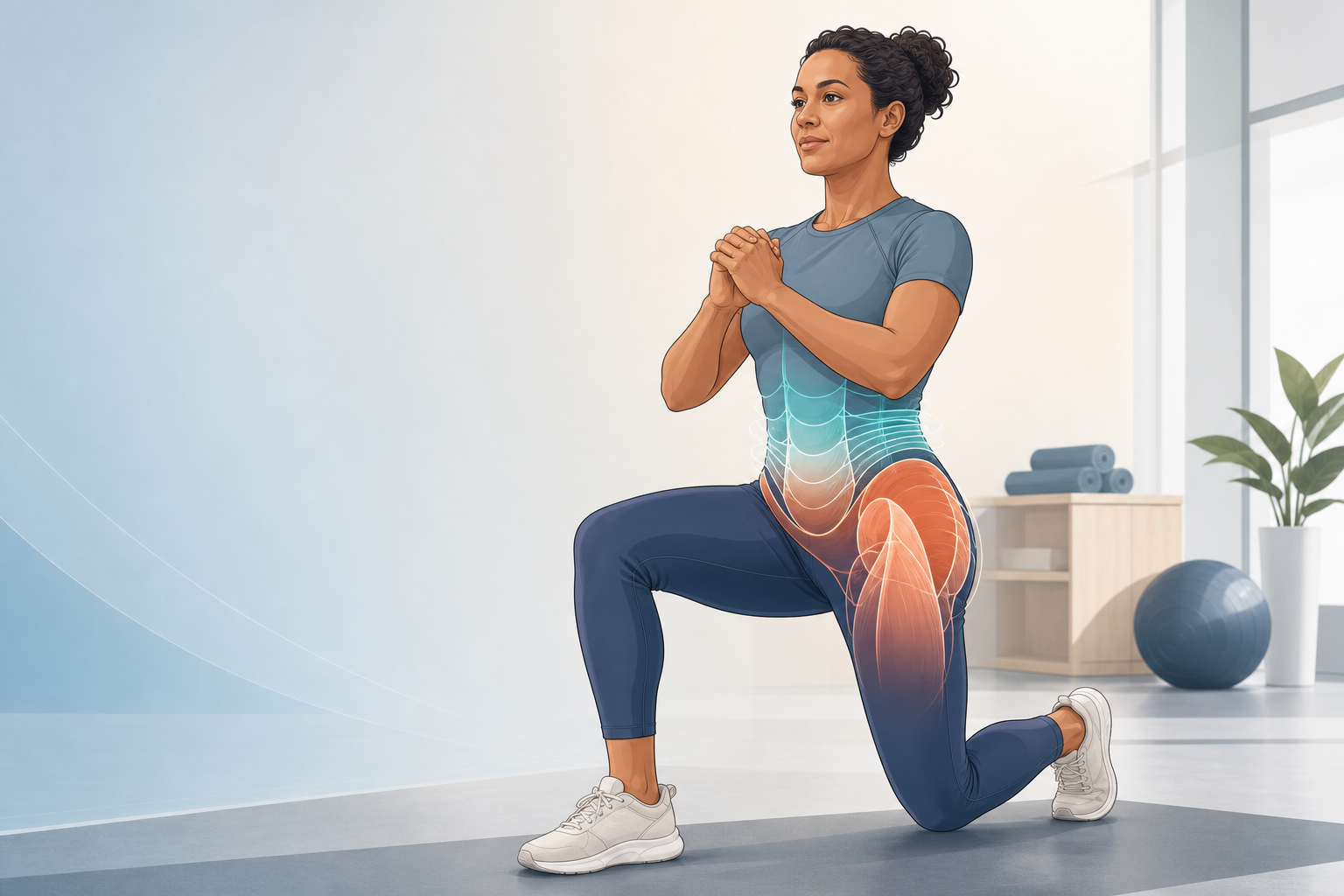
This aligns with a growing body of literature suggesting that deconditioning, fear-avoidance, and reduced physical capacity can contribute to persistent back pain in many individuals.
Strength training is not merely about aesthetics or athletic performance. It can also be about resilience.
That does not mean every back pain case should immediately start deadlifting. But it does challenge the outdated belief that people with back pain should avoid resistance training altogether.
The Bigger Picture
Low back pain is complex. Sleep, stress, workload, recovery, movement habits, physical conditioning, and psychosocial factors all matter.
There is no single “magic exercise.”
But this study provides another important reminder that appropriately coached resistance training can be part of the solution—not just something to avoid.
At FITNESS SF, our trainers work with members across a wide range of goals and experience levels, from beginners learning movement fundamentals to experienced lifters refining performance. A thoughtful assessment and individualized approach can help determine whether movements like the deadlift are appropriate now, later, or somewhere along the progression continuum.
Sometimes the goal is not simply to avoid pain.
Sometimes the goal is to rebuild confidence, resilience, and capacity.
*The content on this blog was written with the assistance of AI and is provided for general informational purposes only. It does not constitute medical advice. No responsibility or liability is assumed for any actions taken based on the information provided.