
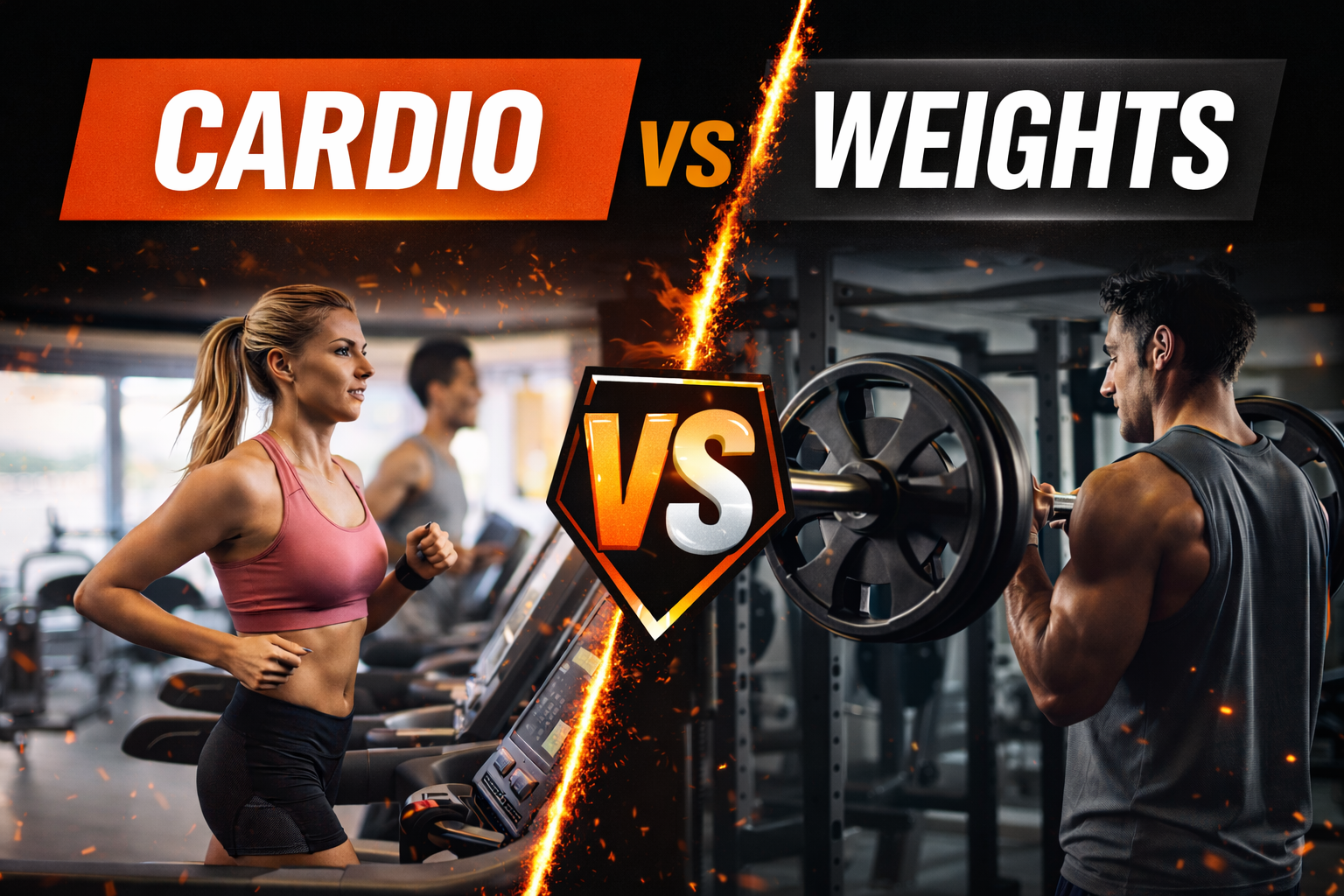
If you hang around our gyms long enough, you’ll hear some version of this debate in every locker room:
“If I want to lose fat, should I just do cardio?”
“But I heard lifting is better because it boosts your metabolism.”
“What if I do both—will they cancel each other out?”
A 2025 systematic review and meta-analysis (36 randomized trials, 1,564 adults) just took a hard look at this exact question: comparing aerobic training (cardio), resistance training (strength), and concurrent training (both in the same week) and how each affects body fat, body weight, and muscle mass (PubMed). Here’s what it means for you at FITNESS SF.
First, what did the researchers actually do?
They pulled together studies from 1980–2023 that:
- Included healthy adults (no major metabolic disease)
- Randomly assigned people to:
- Aerobic Training (AT): things like walking, running, cycling, step, elliptical
- Resistance Training (RT): weights and/or machines
- Concurrent Training (CT): both cardio and weights in the same week
- Ran for at least 4 weeks (many were 10–26+ weeks)
- Measured:
- Fat mass (kg)
- Body fat percentage
- Body weight
- Fat-free mass (FFM) – think muscle, bone, water, organs (all your non-fat tissue)
They also looked at some “program-design” questions:
- Do results change if the program is short vs long (<10 weeks vs ≥10 weeks)?
- Does it matter if cardio and weights are done on the same day vs different days?
- What happens when total workload/energy expenditure is matched between groups?

Key finding #1: For fat loss, cardio and “cardio + lifting” beat lifting alone
For programs lasting 10 weeks or longer:
-
Cardio (AT) and Concurrent Training (CT) both led to more absolute fat mass loss (in kg) than resistance training alone.
-
In plain language:
If the goal is pure fat loss on the scale, moving more (cardio) wins over just lifting.
-
However, percent body fat (how “lean” you are) wasn’t different between the three over the long term—your body composition improves with all of them.
Takeaway for members:
If you’re mostly lifting and barely getting your heart rate up between sets, you’re leaving easy fat-loss gains on the table. That doesn’t mean “ditch the weights”—it means add intentional cardio.
Key finding #2: Lifting still wins for muscle retention
When the researchers looked at fat-free mass (FFM):
-
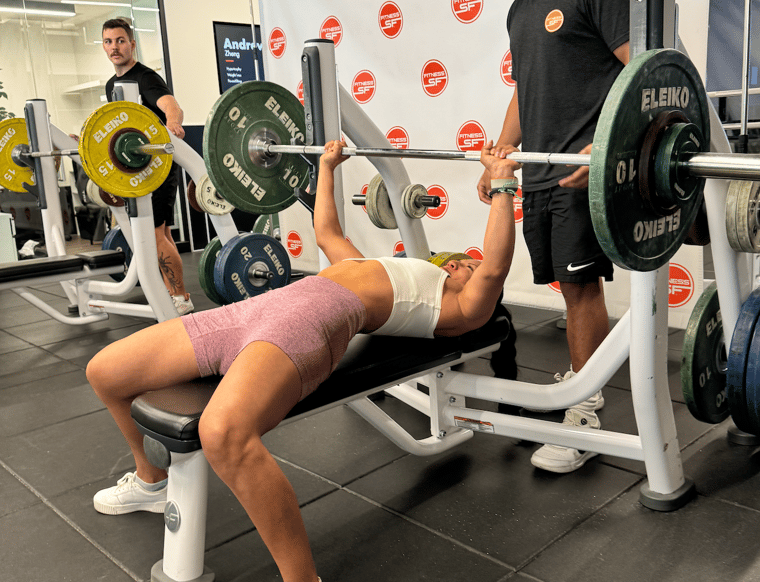
Resistance training (RT) did better than cardio alone at preserving (or increasing) muscle.
-
Concurrent training (CT) landed in the middle—not clearly better or worse than either, but it didn’t destroy gains.
So if your thought is:
“I want to lose body fat without becoming a smaller, weaker version of myself.”
…then resistance training is non-negotiable. Cardio can help the scale move, but weights help determine what you’re losing.
Key finding #3: Over short periods, the type doesn’t matter that much
For programs shorter than 10 weeks:
-
There were no meaningful differences between cardio, lifting, or both for:
-
Fat mass
-
Body fat percentage
-
Body weight
-
Fat-free mass
-
Translation:
If you’re only looking at a 6–8 week window, the biggest win is simply:
Be consistent. Do something you’ll stick with.
Program “type” becomes more important as you extend into months, not weeks.
Key finding #4: When total work is similar, results are similar
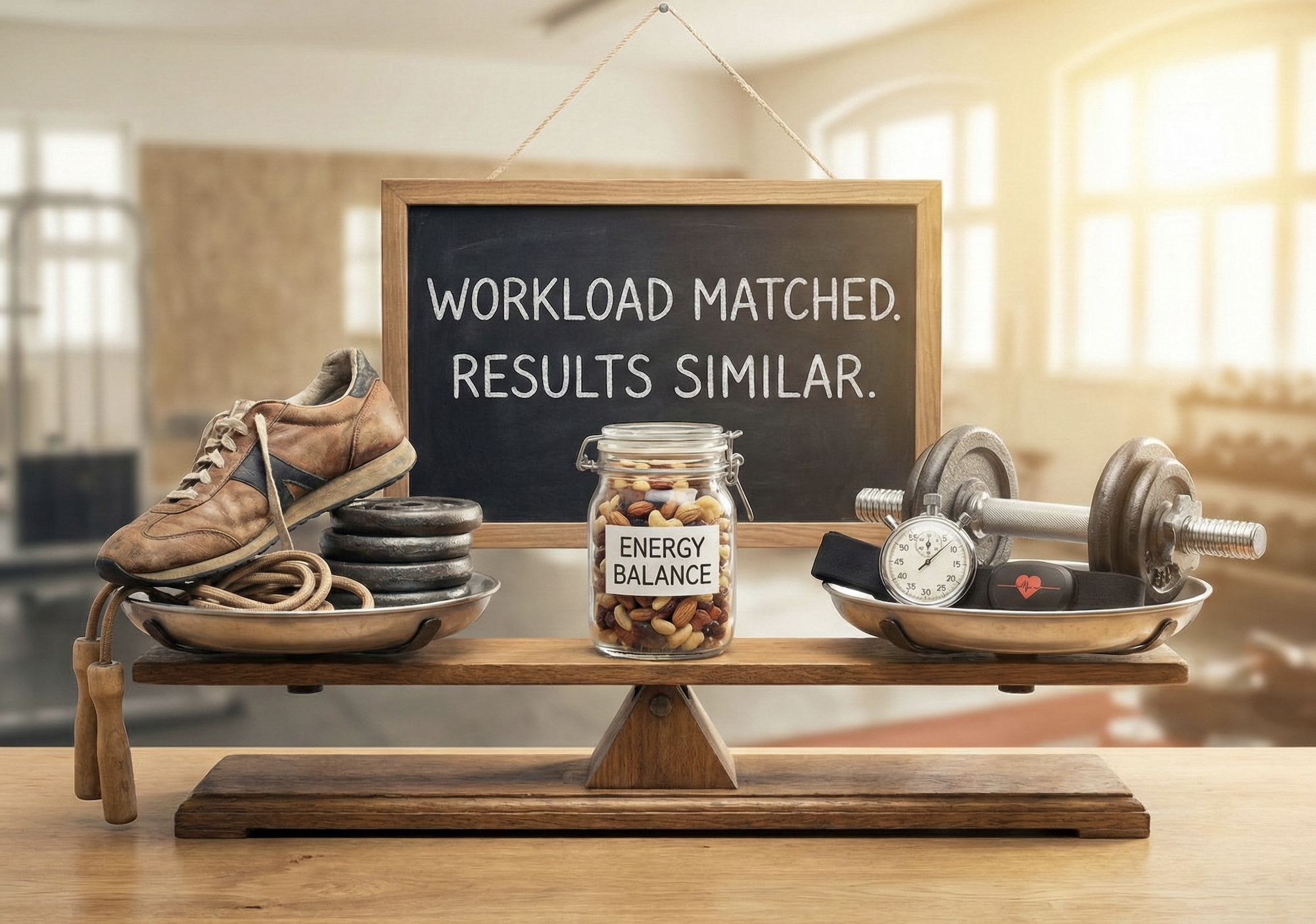
In a subset of studies where researchers tried to match workload between groups (similar duration or estimated caloric cost):
- Cardio vs lifting vs concurrent ended up with similar changes in:
- Fat mass
- Body fat %
- Body weight
- Fat-free mass
This reinforces something we tell members all the time:
Fat loss is primarily about total energy balance.
The exercise style still matters (for strength, enjoyment, joint health), but total volume and consistency drive most of the fat-loss outcome.
Key finding #5: “Same-day vs different-day” doesn’t really make or break it
For concurrent training, they compared:
-
Cardio and lifting on the same day vs
-
Cardio and lifting on different days
Result:
-
Overall, no meaningful difference in fat loss, body weight, or muscle.
-
One analysis suggested same-day concurrent training might edge out pure lifting for fat mass, but this came from very limited data.
Good news:
You don’t need a perfect “cardio in the morning, lifting at night” schedule to make progress. Your life schedule and preferences matter more.
So… how should you train at FITNESS SF?
Let’s translate all this into real-world options.
1. “My #1 goal is fat loss / weight loss.”
Bias toward cardio, keep some lifting.
- Aim for 3–5 days/week where your heart rate is clearly elevated:
- Treadmill walking, incline hiking, running
- Bikes, rowers, stepmills, elliptical
- Cardio-based classes
- Add 2 days/week of full-body strength to protect muscle:
- Squats/leg presses, hinges (deadlifts/hip thrusts), pushes, pulls, core
- Keep at it for at least 10–12 weeks before you judge the program.
2. “I want to be lean and strong.”
Concurrent training is your friend.
A simple structure:
- 2–3 strength days
- 2–3 cardio days (or 10–20 minutes of conditioning at the end of lifting sessions)
- You can:
- Do cardio and lifting on the same day (lift first, then cardio), or
- Split them on different days—whatever you’ll actually show up for
You’ll likely:
- Lose fat about as well as cardio alone
- Maintain or build more strength than with cardio alone
- Still make meaningful body composition changes over time
3. “Strength and performance first; fat loss is secondary.”
Make lifting the base, sprinkle in enough movement.
- 3–4 days/week lifting
- 1–2 days/week cardio (even 20–30 min brisk walking, cycling, or intervals)
- This keeps you progressing in the weight room while supporting your heart, lungs, and long-term health—and it helps prevent the “strong but gassed walking up stairs” problem.
The boring truth: duration and workload beat clever programming
This paper reinforces a message that doesn’t sound sexy, but works:
- Stick with a plan for ≥10–12 weeks.
- Accumulate enough weekly work.
- Include resistance training to protect your muscle.
- Choose the mix of cardio and lifting that you’ll honestly show up for.
Anything is better than nothing—and you don’t have to choose a “team.” You can be Team Cardio + Strength + Consistency.
How FITNESS SF can help you put this into action
If you’re reading this and thinking:
“Okay, I get the theory… but what should I do with my schedule, my body, my injuries, my goals?”
That’s exactly where we come in.
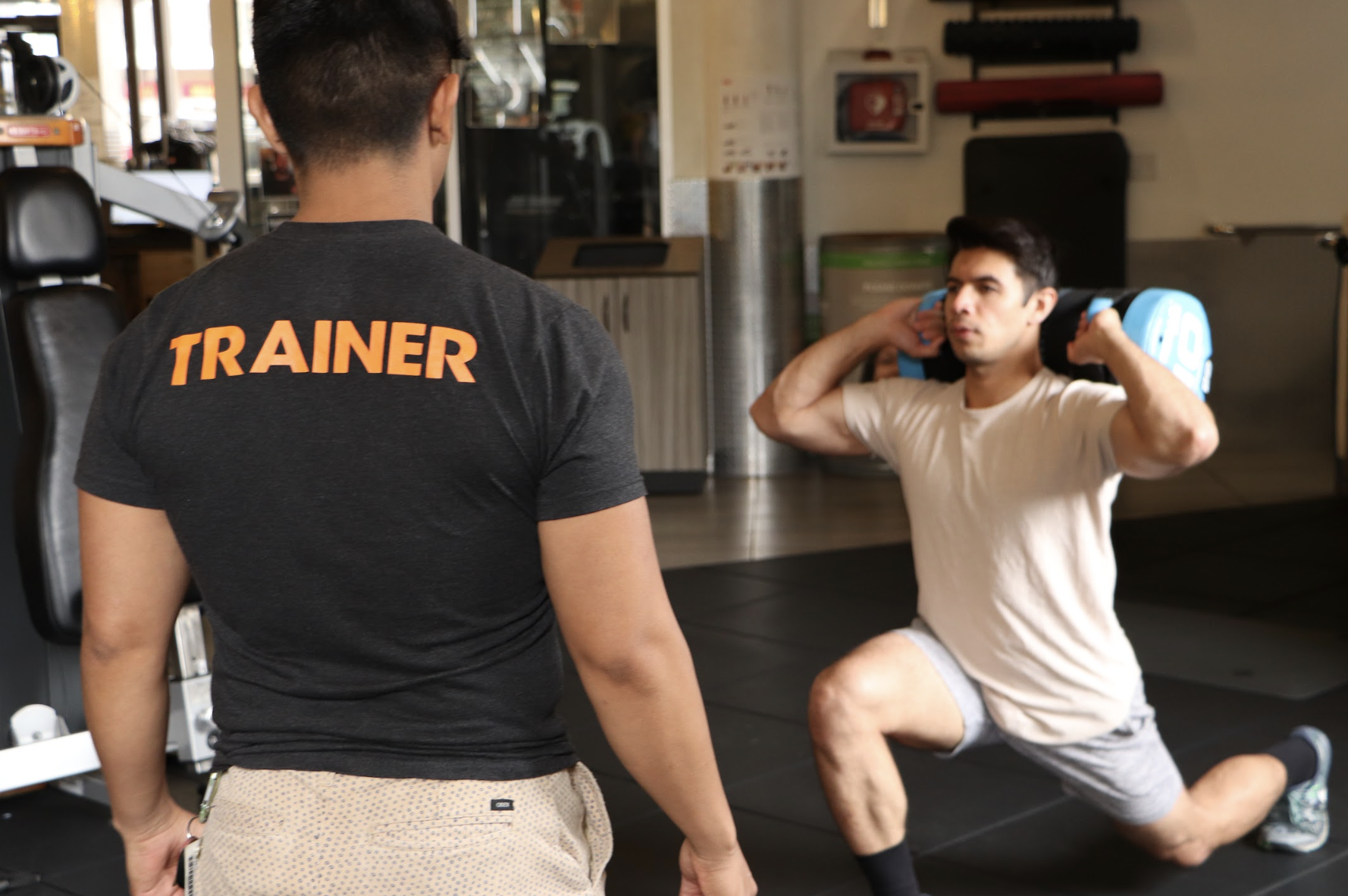
At FITNESS SF, you can:
- Book a Fitness Assessment with one of our personal trainers
- Review your goals (fat loss, strength, performance, health markers)
- Get a personalized concurrent plan that blends:
- The right amount of cardio for fat loss and heart health
- The right strength work to protect muscle and joints
- A schedule that fits your real life in the Bay Area—commute, kids, work, and everything else
Next step: Stop by the front desk at your home club or talk to a FITNESS SF trainer on the floor to schedule your complimentary Fitness Assessment.
Let the science guide the strategy—and let us help you turn that strategy into progress you can actually feel in your clothes, on the stairs, and under the bar.