

For decades, conversations around obesity and fitness have been dominated by one outcome: weight loss. Step on the scale. Count the pounds. Track the BMI.
But emerging research is reinforcing something fitness professionals have observed for years: exercise improves health in ways that extend far beyond changes in body weight.
A recent review published in the Journal of Sport and Health Science examined the role of physical activity in adults living with overweight and obesity. The conclusion was clear: movement meaningfully improves cardiometabolic health, mobility, cognition, muscle quality, psychological well-being, and overall function — even when dramatic weight loss does not occur.
That distinction matters.
At FITNESS SF, we believe exercise should not be reduced to punishment for body size. Physical activity is one of the most powerful tools available for improving quality of life, preserving independence, increasing energy, and enhancing long-term health — regardless of what the scale says this week.
Fitness Is More Than Weight Loss

One of the most important points emphasized in the paper is that exercise creates health adaptations independent of body weight reduction.
In practical terms, this means a person can:
- improve blood pressure
- improve insulin sensitivity
- gain cardiovascular fitness
- preserve or increase muscle quality
- improve mood and cognition
- reduce visceral fat
- move better
- feel stronger
…without necessarily seeing massive changes in total body weight.
This is particularly important because weight loss can be difficult to achieve and even harder to sustain long-term. The researchers note that while dietary restriction is often the primary driver of weight loss, exercise contributes additional health benefits that diet alone does not fully replicate.
Exercise Changes the Body in Ways the Scale Cannot Measure
A scale tells you almost nothing about body composition.
The paper highlights how exercise can improve the quality and distribution of tissue throughout the body — including skeletal muscle, fat tissue, and bone.
For example:
Resistance Training Helps Preserve Muscle
When people lose weight rapidly, they often lose lean tissue alongside body fat. Resistance training helps blunt this loss and preserve muscle function.
This is increasingly relevant in the era of GLP-1 medications such as semaglutide and tirzepatide, where substantial weight loss may also involve significant lean mass reduction. The authors suggest exercise may play an important role in maintaining muscle quality during these interventions, though more research is still emerging.
Exercise Targets Visceral Fat
Not all body fat behaves the same way metabolically.
Exercise has been shown to preferentially reduce visceral fat — the fat surrounding abdominal organs that is strongly associated with cardiometabolic disease risk. Remarkably, some studies demonstrate reductions in visceral fat even without substantial changes in total body weight.
Movement Improves Muscle “Quality”
People often assume strength is simply about muscle size. But the paper discusses something more important: muscle quality.
Exercise improves mitochondrial function, muscular efficiency, endurance, force production, and glucose metabolism.
In other words, exercise helps your muscles become healthier, more metabolically active tissue.
Fitness Protects Long-Term Health
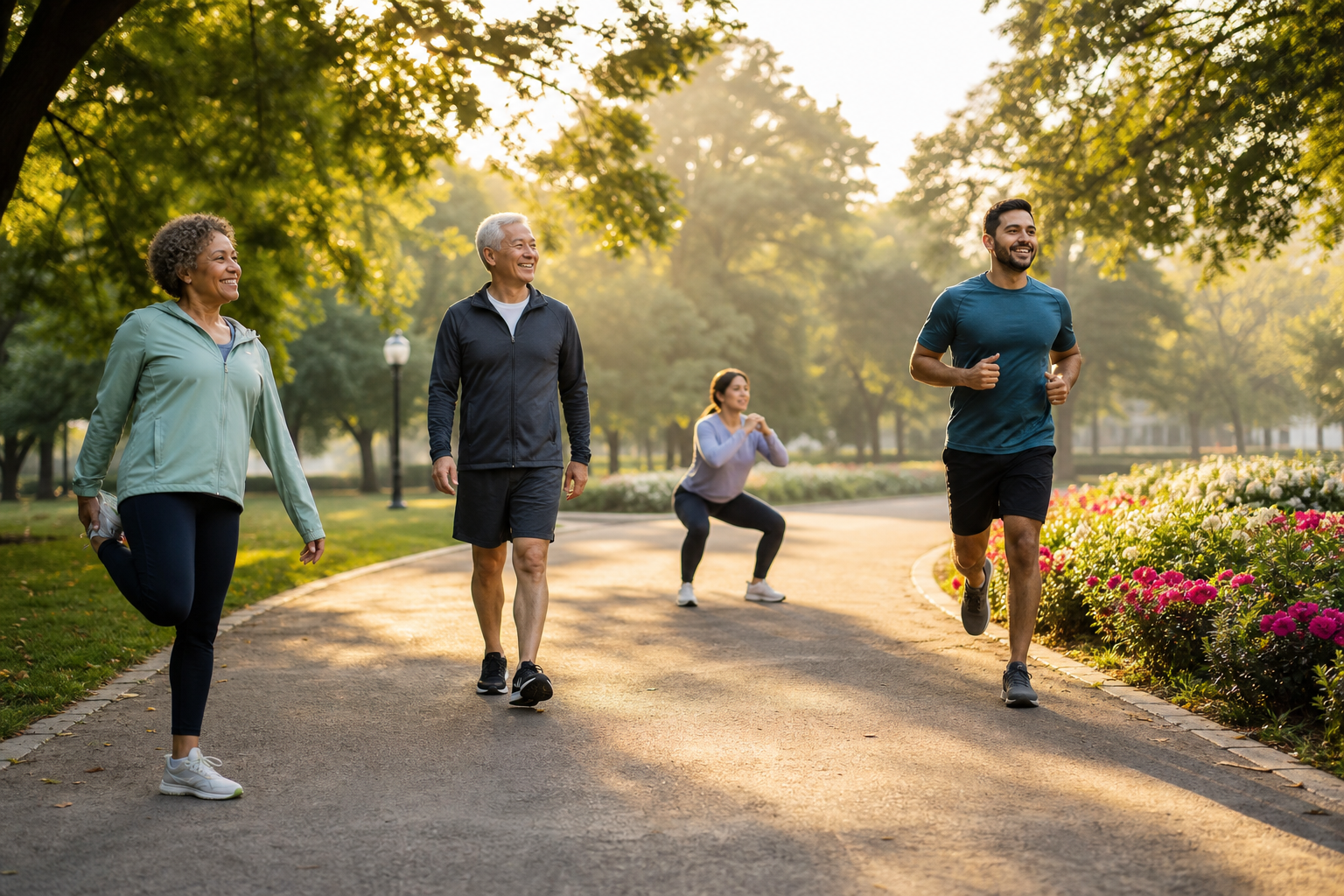
Cardiorespiratory fitness consistently emerges in medical literature as one of the strongest predictors of long-term health outcomes.
Higher fitness levels are associated with lower rates of cardiovascular disease, type 2 diabetes, certain cancers, and all-cause mortality.
Importantly, these benefits are observed even in adults classified as overweight or obese.
The review also discusses how exercise improves:
- blood pressure regulation
- lipid profiles
- glucose uptake
- insulin sensitivity
- inflammatory markers
- antioxidant defenses
Some of these effects are amplified when exercise also produces weight loss, but many occur independently through the physiological effects of movement itself.
Brain Health Matters Too
Exercise is not just a metabolic intervention.
The paper reviews evidence linking physical activity to improvements in:
- hippocampal volume
- memory
- executive function
- mood
- anxiety
- depressive symptoms
- cognitive performance
Physical activity may literally help support structural and functional changes in the brain.
This aligns with what many people experience firsthand after consistent training: clearer thinking, better stress tolerance, improved confidence, and enhanced emotional resilience.
A Better Starting Point for Exercise
One of the most refreshing aspects of the paper is its emphasis on how exercise programs should actually begin.
The authors argue that exercise programming for individuals living with obesity should initially focus on:
- mobility
- physical function
- health improvements
- sustainability
- confidence-building
—not athletic performance.
That is an important distinction.
Too often, people enter gyms believing they need to immediately perform high-intensity workouts, aggressive boot camps, or punishing calorie-burning sessions. In reality, successful long-term exercise programs are usually progressive, individualized, and built around consistency.
Sometimes the first victory is simply:
- walking without pain
- climbing stairs more easily
- improving energy
- sleeping better
- building routine
- reducing fear around movement
Those adaptations matter.
The FITNESS SF Perspective
At FITNESS SF, we believe the fitness industry should evolve beyond simplistic “before and after” thinking.
Exercise is not merely a tool for shrinking bodies. It is a tool for improving human function, preserving independence, supporting mental health, increasing resilience, and enhancing quality of life across the lifespan.
The research increasingly supports what experienced coaches and healthcare professionals have seen for years: movement changes lives long before dramatic visual changes occur.
That is why our trainers focus not only on aesthetics, but also on:
- strength
- movement quality
- energy
- cardiovascular fitness
- confidence
- long-term sustainability
- health behaviors that people can realistically maintain
Because health is bigger than the scale.