

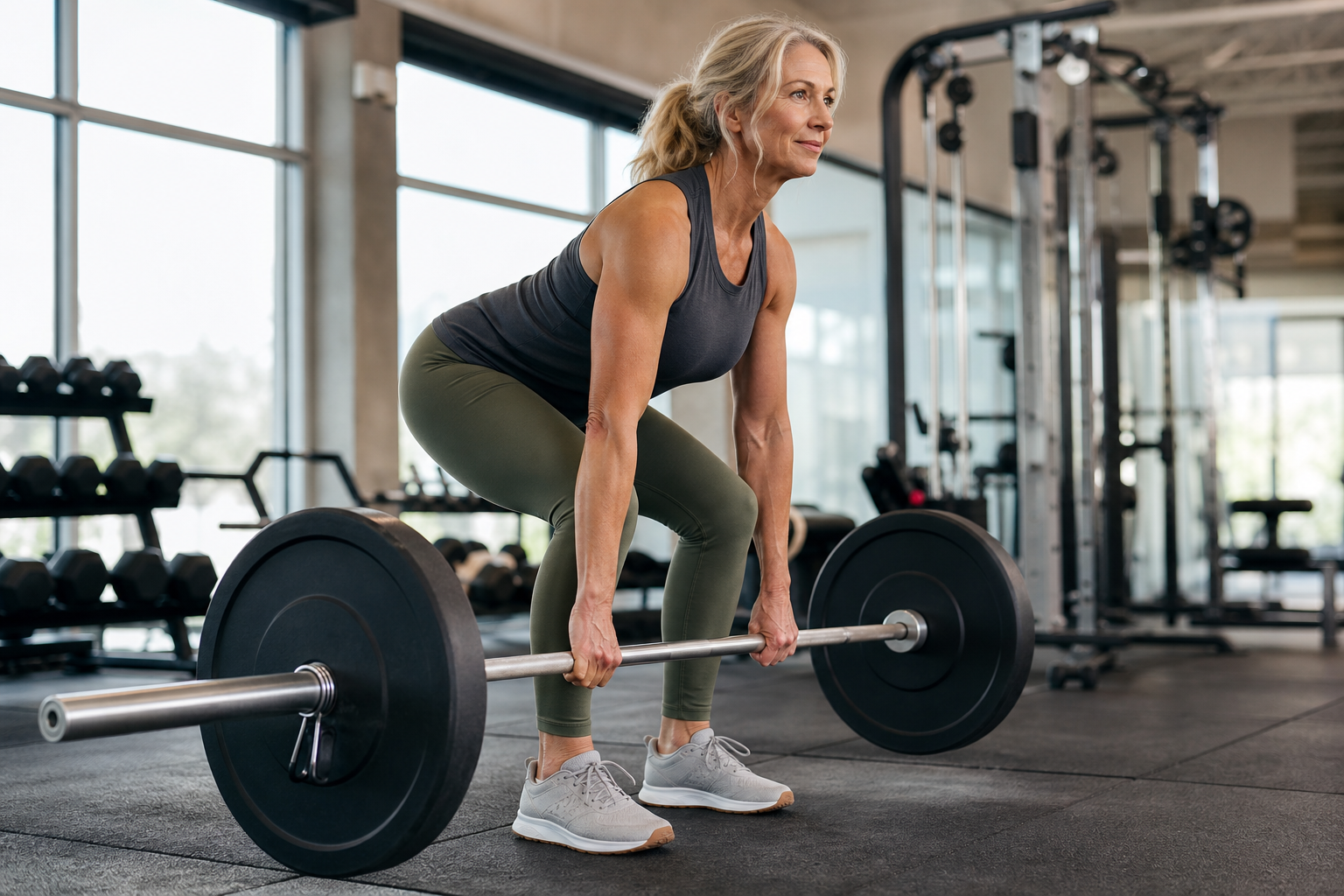
Menopause is often discussed in terms of hot flashes, sleep, and mood. But the transition also changes how many women experience their musculoskeletal system. A familiar workout may suddenly produce more soreness. A shoulder or Achilles tendon may feel less tolerant of a fast increase in training. Building or preserving muscle can seem harder than it once did.
These experiences are real, but they do not mean the body has become fragile. They mean the training signal, the rate of progression, and recovery deserve more attention.
Collagen Is Part of the Story, Not the Whole Story
Collagen is a major structural protein in tendons, ligaments, skin, cartilage, bone, and the connective-tissue framework within muscle. It helps tissues transmit force and tolerate load. Estrogen interacts with musculoskeletal tissues, and the decline in estrogen around menopause is associated with changes in connective-tissue turnover as well as losses in bone and muscle.
The details are not simple. A systematic review of female sex hormones and tendon explained that estrogen deprivation can negatively affect connective tissue and its turnover, but the human evidence about estrogen supplementation, tendon collagen, tendon structure, and exercise response was low-quality, contradictory, and inconsistent. In other words, hormones matter, but “less estrogen equals bad collagen” is too crude to explain an individual woman's pain, injury risk, or training response.
That distinction matters. Tendon pain is not a direct measurement of collagen content. Joint stiffness is not proof that a tissue is damaged. And menopause should not become a reason to avoid loading the body.
Strength Still Responds After Menopause
The more encouraging evidence is that muscle remains highly trainable. A 2026 systematic review and meta-analysis pooled 126 resistance-training studies involving 4,019 women; about two-thirds of the participants were postmenopausal. Resistance training improved muscular strength in both premenopausal and postmenopausal women, with no significant difference between those groups. Functional mass increased and fat mass decreased in both groups as well.
The study does not show that menopause has no effect on the body. It shows something more useful: menopausal status did not eliminate the capacity to adapt to resistance training. The authors concluded that general resistance-training principles can apply across the female lifespan, with individualization taking priority over rigid age- or sex-based rules.
This is an important counterweight to the idea that midlife training should become permanently lighter or more cautious. The goal is not to make strength training easy. The goal is to make it progressive and recoverable.
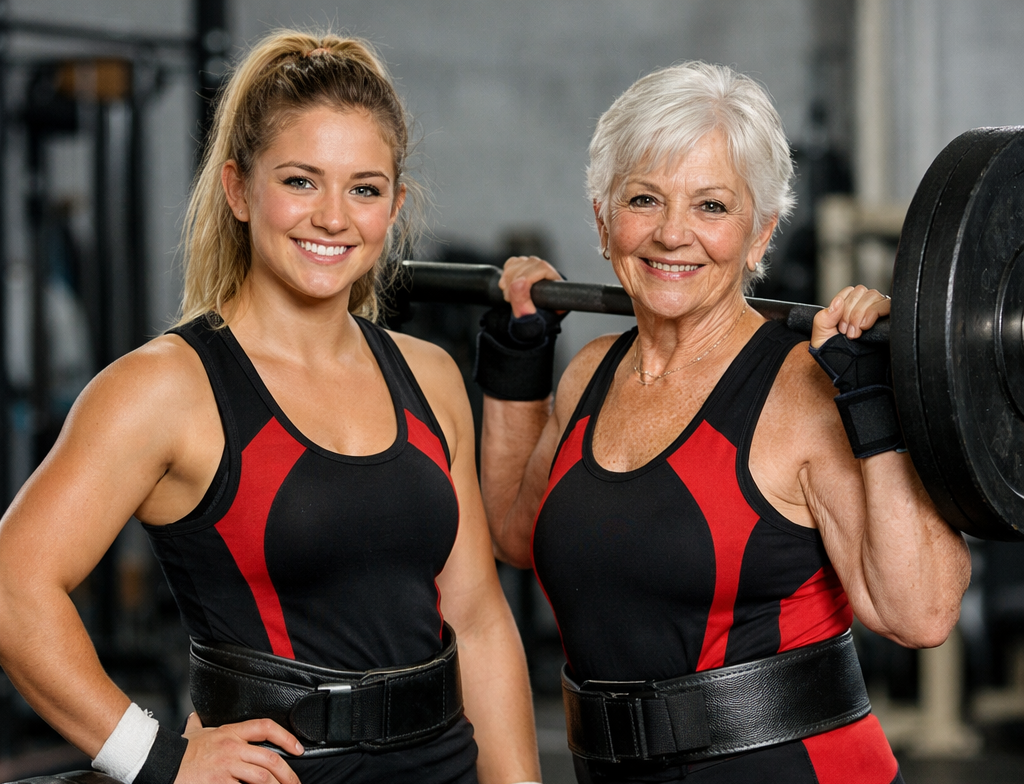
Muscle Can Improve Faster Than Tendons Feel Ready
Muscle, tendon, and bone do not adapt on identical timelines. Early strength gains can happen partly because the nervous system becomes more efficient at producing force. Connective tissue remodels more slowly. This can create a mismatch: a person feels stronger and adds load rapidly, while a tendon is still developing tolerance for that load.
That does not make resistance training dangerous. It makes progression important. Tendons need mechanical loading to maintain and develop capacity, but they usually respond better to repeated, manageable exposure than to long periods of inactivity followed by a sudden return to high volume or intensity.
The practical response is not to chase soreness or test your maximum every week. It is to create a clear training signal, allow recovery, and gradually ask the tissue to do more.
A Better Way to Build Strength Through Menopause
A sound program should train the major movement patterns: squatting or stepping, hinging, pushing, pulling, carrying, and resisting unwanted movement through the trunk. Machines, free weights, cables, and body-weight exercises can all work. The best tools are the ones that let you train consistently with good control and progress over time.
Keep these principles in view:
- Begin with a load you can control. The final repetitions should require effort without forcing you to abandon technique.
- Progress one variable at a time. Add a small amount of weight, an extra repetition, or another set rather than changing everything at once.
- Repeat movements long enough to learn from them. Constant novelty makes it harder to tell whether your capacity is improving.
- Treat recovery as part of training. Sleep disruption, hot flashes, stress, and inconsistent nutrition can change what is recoverable on a given week.
- Respond to persistent pain instead of training through it indefinitely. A clinician or qualified rehabilitation professional can help assess pain that is worsening, affecting daily function, or not settling with reasonable modification.
If you are new to lifting, returning after time away, or unsure how to progress around symptoms, working with a FITNESS SF personal trainer can help turn these principles into a realistic plan. A trainer can adjust exercise selection and loading while helping you build confidence with the equipment.
Strength training also fits into a larger approach to healthy aging. Our guide to how exercise helps prevent frailty and fragility fractures explains why muscle, balance, and bone-loading activity matter together.
The Takeaway
Menopause changes the environment in which tissues adapt. It does not close the door on adaptation.
Collagen and connective tissue are part of the picture, but they should not become a story of inevitable decline. The clearest evidence is that women continue to gain strength and functional mass after menopause. The most useful strategy is steady, progressive resistance training that challenges muscle while giving tendons, joints, and recovery enough time to come with it.
The content on this blog was written with the assistance of AI and is provided for general informational purposes only. It does not constitute medical advice. No responsibility or liability is assumed for any actions taken based on the information provided.