

Artificial intelligence can build a workout in seconds.
Tell it your age, goals, available equipment, injury history, and weekly schedule, and it can produce an organized program complete with exercises, sets, repetitions, and rest periods. It can explain progressive overload, estimate your protein needs, suggest substitutions, and revise the plan whenever you ask.
That is impressive—and it should make the fitness industry uncomfortable.
Because if a personal trainer’s primary value is counting repetitions, selecting exercises from a familiar list, and delivering the same program to nearly every client, AI may already provide comparable information more quickly, conveniently, and inexpensively.
In fact, a 2026 study comparing ChatGPT with certified personal trainers found that the AI-generated answers scored higher on six of nine common exercise questions. The answers were evaluated for scientific accuracy, clarity, and usefulness. None of the trainers’ answers significantly outperformed ChatGPT on any of the measured criteria.
That finding does not prove that AI is a better personal trainer. Answering written questions is not the same as coaching a living, moving human being. But it does expose an important truth: simply possessing fitness information is no longer enough to establish professional value.
The trainers most threatened by AI are those whose entire service can be reduced to information.
What AI Already Does Well
AI is exceptionally good at retrieving, organizing, and presenting general knowledge. It can help someone:
- Create a basic training schedule
- Learn how an exercise is supposed to work
- Track workouts and identify numerical trends
- Generate alternative exercises
- Adjust a program around limited equipment
- Summarize established training principles
- Provide reminders, encouragement, and basic accountability
Research suggests on digital health interventions shows these tools can produce meaningful results. A 2025 systematic review of human, AI, and hybrid health coaching found that AI-based coaching showed generally positive effects on physical activity, goal attainment, and adherence (despite how digital interventions face criticism for shallow and transactional engagement and retention challenges) . A randomized trial published in npj Digital Medicine also found that personalized AI coaching increased physical activity among previously inactive adults.
More strikingly, a 2025 randomized clinical trial published in JAMA found that a fully automated, AI-led Diabetes Prevention Program was not inferior to a human-led program on a combined outcome involving weight loss, physical activity, and hemoglobin A1c.
We should not dismiss these findings simply to protect the fitness profession. AI is useful. It will become more capable, more personalized, and more deeply integrated with wearables and health data.
A good trainer should use that technology.
A bad trainer should be worried about competing with it.
A Program Is Not the Same as Coaching
The problem is that a workout exists on paper. A person exists in context.
AI knows only what it has been told. It cannot reliably see that a client arrived moving differently today, slept three hours, appears unusually short of breath, or is quietly guarding one side of the body. It does not necessarily know that “my shoulder feels a little strange” means something very different from the soreness the client described last week.
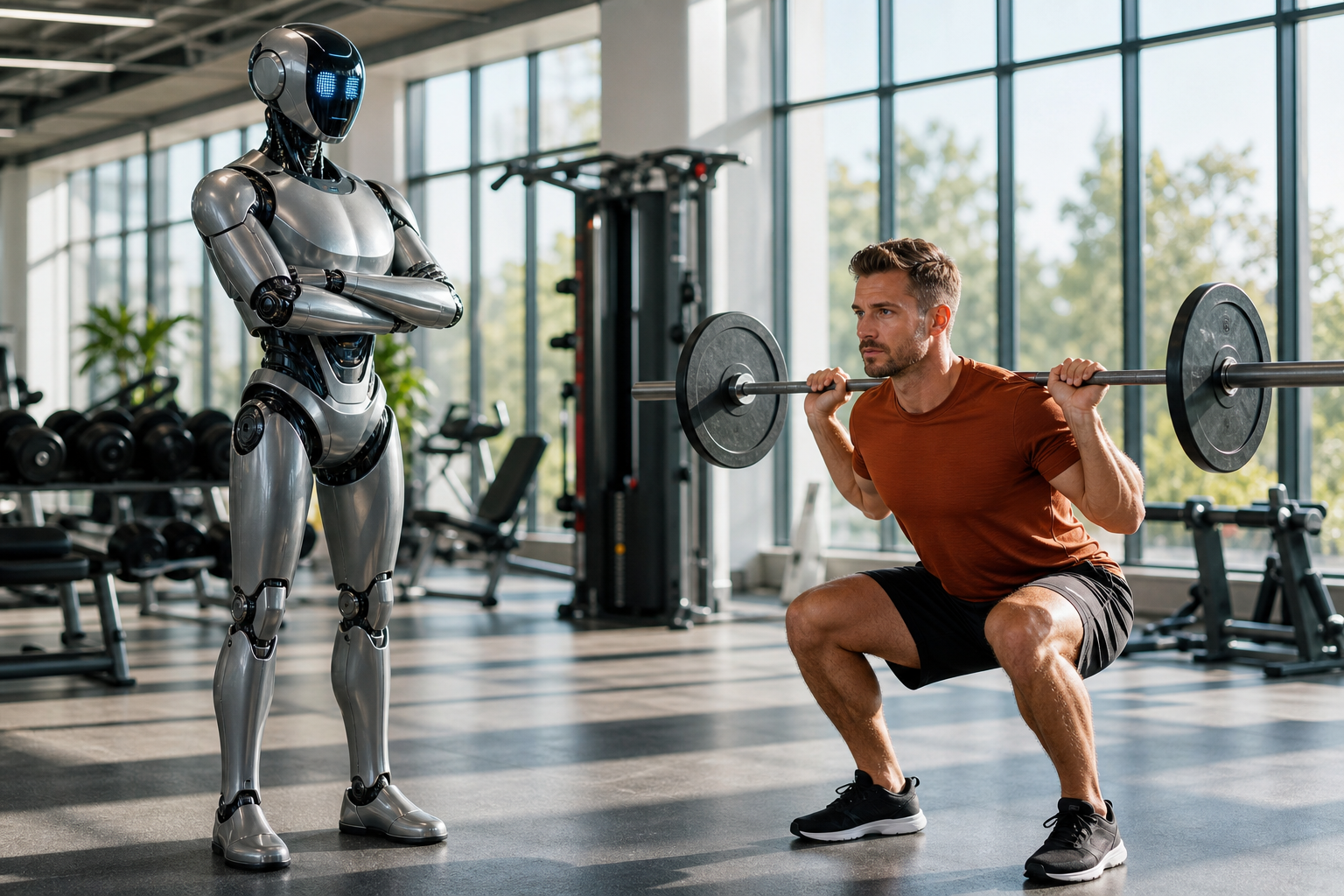
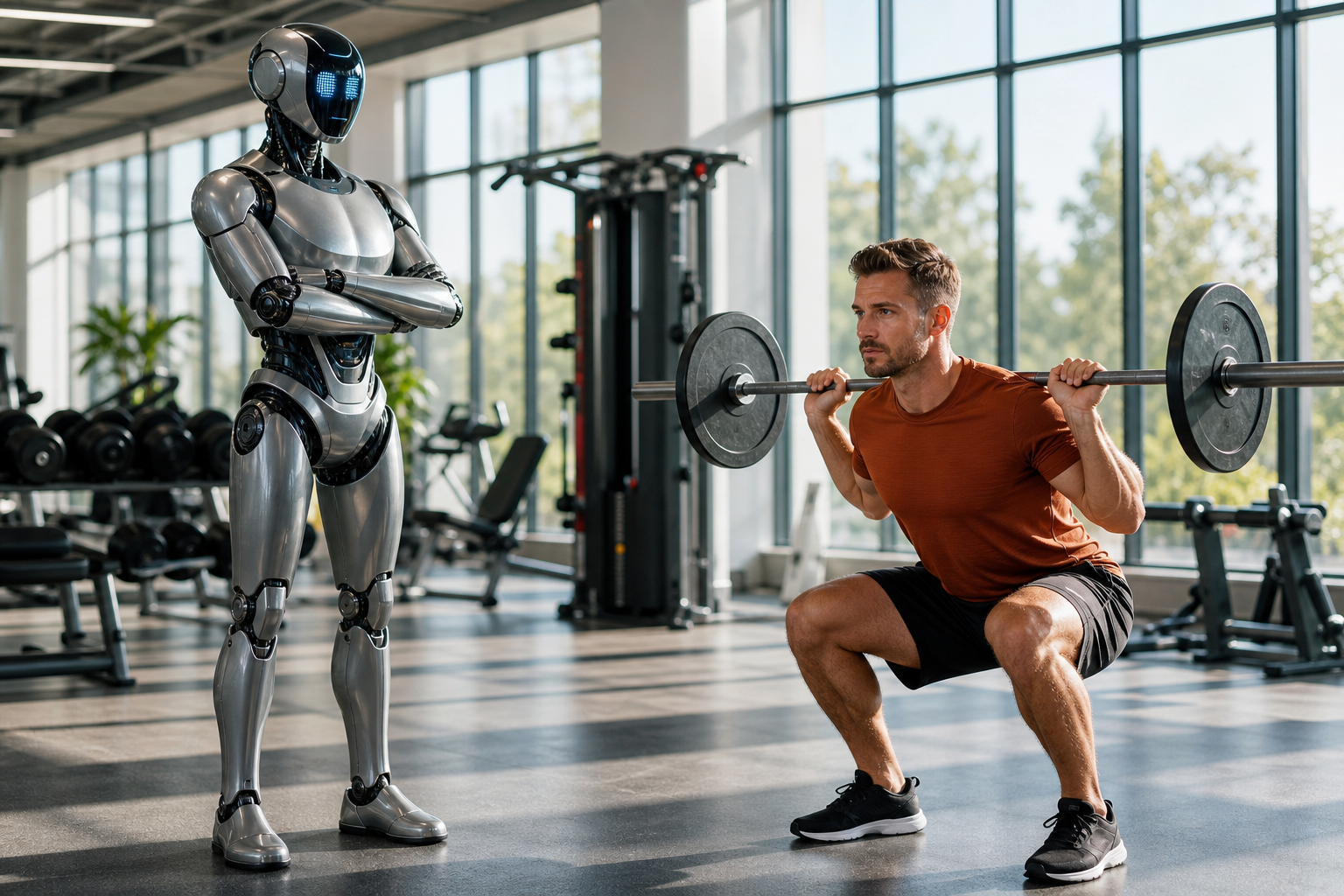
It may be able to describe a squat, but it cannot yet match the full judgment of an attentive professional standing beside a client—watching how the feet interact with the floor, noticing a subtle shift under fatigue, and deciding whether the person needs a cue, a regression, a different exercise, or a referral.
That distinction matters because AI-generated recommendations still have important limitations. One critical evaluation of GPT-4 exercise prescriptions found that the generated plans lacked precision when addressing individual health conditions and goals. Research involving at-risk populations has reached a similar conclusion: AI-generated exercise prescriptions may be useful as decision-support tools, but professional oversight remains important when medical complexity and safety are involved.
A good trainer does not simply deliver the plan. A good trainer continuously interprets the person’s response to it.
Good Trainers See What Clients Do Not Say
People rarely arrive at the gym as clean collections of goals and variables.
They arrive after difficult workdays. They bring old injuries, intimidating gym experiences, inconsistent sleep, complicated relationships with food, fear of failure, and beliefs about their bodies that may have been reinforced for decades.
Sometimes a client says, “I’m tired,” when the real issue is anxiety.
Sometimes “I don’t like that exercise” means “I feel embarrassed because I cannot do it.”
Sometimes “I need you to push me harder” comes from someone who has learned to confuse punishment with progress.
AI can respond to the words that are entered. A perceptive trainer listens for the meaning beneath them. The human relationship is not something added to the workout. In many cases, it is what makes the workout sustainable.
Accountability Requires Judgment
An app can send a notification. A chatbot can ask whether you completed your workout. Neither action necessarily creates meaningful accountability.
Human accountability is adaptive.
A good trainer learns when a client needs a challenge and when that same client needs compassion. The trainer knows the difference between an excuse, a legitimate barrier, and a sign that the plan itself is failing. A good trainer can confront avoidance without humiliation and celebrate progress without creating dependence on praise.
Most importantly, good trainers help clients develop autonomy. The goal is not to make someone permanently dependent on supervision. It is to help that person become more capable, confident, and informed.
A systematic review of interpersonal behavior and exercise persistence found evidence that autonomy-supportive behavior from exercise professionals can help satisfy basic psychological needs and support more self-determined motivation. Research conducted specifically in fitness settings has likewise highlighted the influence of supportive coaching behavior on motivation and commitment.
A trainer who only commands may be less effective than an app.
A trainer who teaches a client how to understand and direct their own body is doing something far more valuable.
Supervision Changes What Is Possible
Supervised training also affects outcomes.
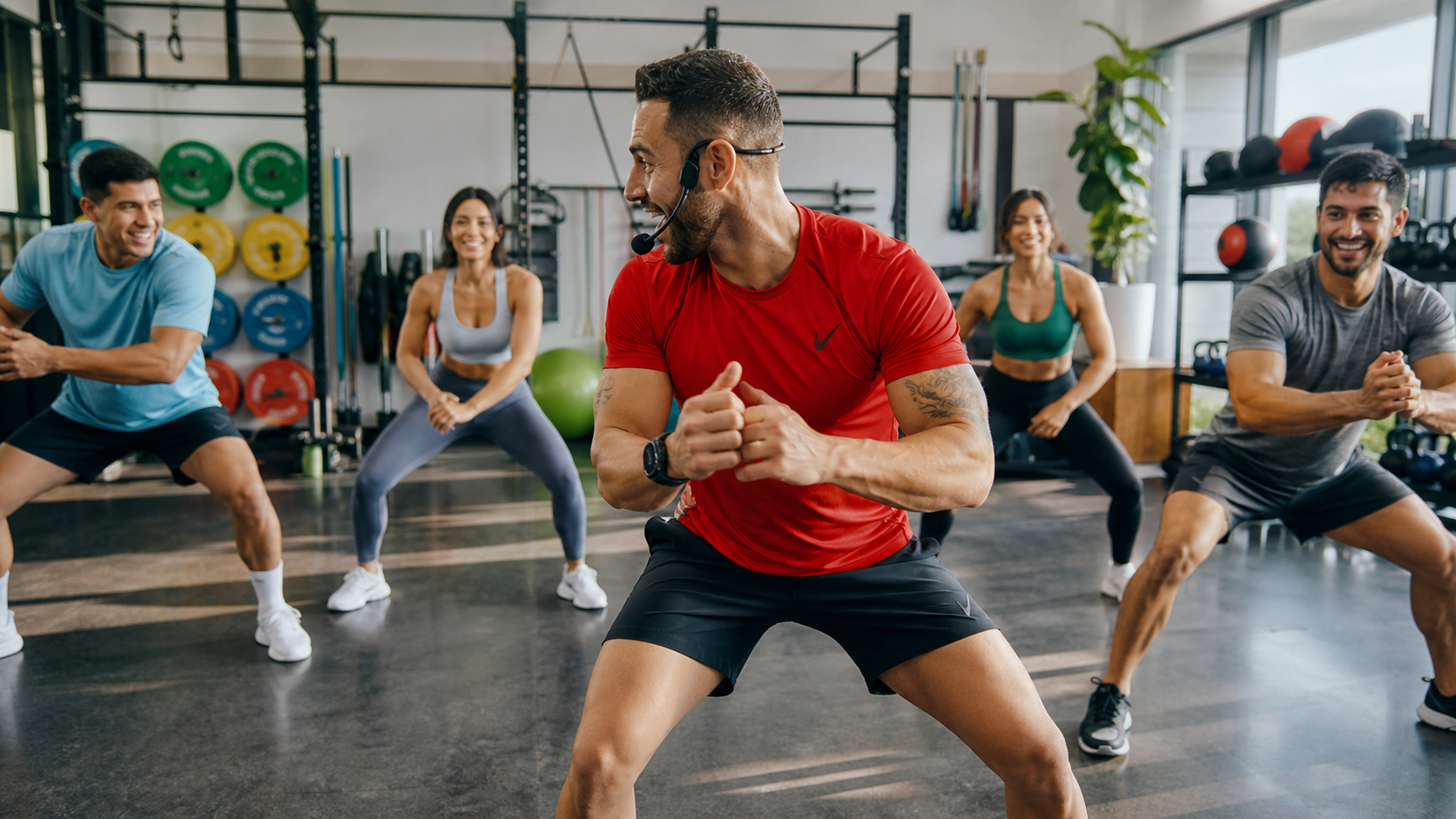
A 2024 systematic review and meta-analysis involving 34 studies and 2,830 older adults found that supervised exercise produced greater improvements than unsupervised exercise across several measures of physical function and well-being.
More recent resistance-training research has similarly found that supervised resistance training produced greater improvements in strength, body composition, well-being, and satisfaction than unsupervised training.
This does not mean every workout must be supervised. It means skilled supervision can improve the quality of the stimulus, the appropriateness of progression, and the consistency with which the work is performed.
A written program might say, “Perform three sets of eight.”
A trainer determines whether the eighth repetition looked like an appropriate effort, a technical failure, a pain response, or a sign that the load was poorly selected. That decision changes what happens next.
The Uncomfortable Challenge for Trainers
AI is raising the minimum standard for our profession.
It is no longer enough to memorize exercises. It is not enough to prescribe three sets of ten, provide generic encouragement, or make every client sweat. Information that was once difficult to access is now essentially free.
The modern trainer must bring value that cannot be generated by typing a prompt:
- Careful observation
- Sound professional judgment
- Real-time program modification
- Skilled communication
- Emotional intelligence
- Appropriate professional boundaries
- Recognition of warning signs
- Collaboration with healthcare professionals
- Knowledge of when to progress, when to stop, and when to refer
- A relationship that helps the client remain engaged long enough to change
This requires education and continued professional development. The American College of Sports Medicine’s Certified Personal Trainer standards emphasize reviewing medical and exercise history, interpreting assessments, selecting appropriate modalities, individualizing exercise prescriptions, and modifying programs for different populations and conditions.
Those responsibilities are very different from merely producing a list of exercises.
Trainers should absolutely use AI to research ideas, organize information, draft programs, analyze training logs, and reduce administrative work. But they must also be qualified to evaluate what it produces. A professional who cannot recognize a flawed recommendation cannot safely supervise its use.
AI should make a good trainer more effective. It should never become a substitute for that trainer’s judgment.
The Challenge for Clients
Clients should also reconsider what they are purchasing.
If your trainer rarely assesses you, does not track progress, repeats nearly identical workouts, fails to explain why you are doing something, or spends the session counting repetitions you could count yourself, it is reasonable to ask what professional value is being added.
A good trainer should be able to answer:
- Why is this exercise appropriate for me?
- What are we trying to improve?
- How will we measure whether it is working?
- What would cause you to modify this plan?
- How does my program account for my history, abilities, preferences, and goals?
- What are you teaching me that will make me more capable over time?
The answer should be more meaningful than, “Because this is a good exercise.”
Technology Changes the Standard—Not the Mission
At FITNESS SF, we believe the right environment makes the right choice easier. Technology can be part of that environment. AI can improve access to information, extend coaching between sessions, and help trainers make better use of their time.
But health and fitness remain profoundly human.
A machine can generate a workout. A great trainer creates understanding.
A machine can record performance. A great trainer interprets it.
A machine can deliver reminders. A great trainer builds trust, confidence, competence, and lasting behavioral change.
AI will not eliminate personal training.
It will eliminate the assumption that basic information alone is worth paying for.
For trainers, that is a challenge to become more educated, observant, and human. For clients, it is an invitation to expect more. And for the best personal trainers, AI is not a replacement at all.
It is another tool in their hands.
*The content on this blog was written with the assistance of AI and is provided for general informational purposes only. It does not constitute medical advice. No responsibility or liability is assumed for any actions taken based on the information provided.